The Strategic Power of Whimsy: Why Love Holiday Redefines Emotional Branding in Digital Design
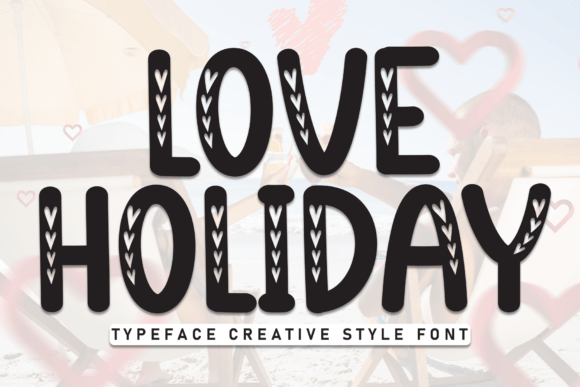
In the saturated landscape of digital marketing and brand identity, the choice of typography is no longer merely a functional decision; it is a strategic imperative. As consumers become increasingly desensitized to traditional advertising, brands are seeking new ways to forge authentic emotional connections. This shift has elevated the importance of display fonts that do more than convey information—they must evoke feeling. Enter Love Holiday, a bold display font with little heart shapes tucked inside the letter lines, adding a fun and sweet touch to your text. It is perfect for creating cheerful and romantic designs, but its utility extends far beyond simple aesthetics into the realm of psychological engagement and brand differentiation.
Beyond Aesthetics: The Psychology of Playful Typography
To understand the growing attention surrounding Love Holiday, one must first recognize the broader trend toward "human-centric" design. For years, the tech and corporate sectors favored sterile, minimalist sans-serif typefaces that projected efficiency and neutrality. However, market data suggests a pendulum swing. Consumers, particularly Millennials and Gen Z, are gravitating toward brands that exhibit personality, vulnerability, and joy. This is where the specific design mechanics of Love Holiday become relevant. By integrating subtle heart motifs directly into the structural lines of the letters, the font bypasses cognitive processing and appeals directly to emotional centers. It signals warmth without sacrificing legibility, a delicate balance that many decorative fonts fail to achieve.
This integration of symbol and structure reflects a larger movement in visual communication known as semantic typography. Rather than relying on separate icons or emojis to convey tone, the typeface itself carries the semantic weight. When a marketer uses Love Holiday for a headline, they are not just choosing a style; they are embedding a value proposition of care, affection, and approachability directly into the textual fabric. This reduces the cognitive load on the viewer, allowing for faster emotional resonance—a critical factor in an economy defined by shrinking attention spans.
Aligning with Modern Consumer Expectations
The relevance of Love Holiday is also tied to changing consumer expectations regarding authenticity. In an era of AI-generated content and automated customer service interactions, there is a premium on touches that feel handcrafted and intentional. The "fun and sweet touch" provided by this font serves as a digital proxy for human warmth. For entrepreneurs and freelancers, particularly those in lifestyle, wellness, and boutique retail sectors, adopting such a typeface can bridge the gap between a scalable business model and a personalized customer experience.
Consider the workflow of a modern social media manager. They are tasked with creating hundreds of assets monthly, each needing to stand out in a crowded feed. Using a distinctive display font like Love Holiday allows for rapid brand recognition. It creates a visual anchor that users associate with positive experiences. This is not merely about being "cute"; it is about building a consistent visual language that reinforces brand loyalty. As businesses move toward community-led growth strategies, tools that facilitate friendly, inviting communication become essential infrastructure rather than optional embellishments.
Practical Applications Across Industries
While the name suggests a niche application, the versatility of Love Holiday makes it suitable for a wide array of professional contexts. Its bold weight ensures readability even at smaller sizes, while the internal heart details provide intrigue upon closer inspection. Here is how various professionals are leveraging this typographic tool:
- Wedding and Event Planning: Beyond the obvious invitation suites, planners are using Love Holiday for digital save-the-dates, website headers, and signage. It modernizes the traditional romantic aesthetic, moving away from overly ornate scripts that can be difficult to read on mobile devices.
- Health and Wellness Brands: Mental health apps, yoga studios, and self-care product lines are adopting this font to soften their messaging. It helps destigmatize serious topics by wrapping them in a package of accessibility and kindness.
- E-commerce and Packaging: Small business owners are using Love Holiday on packaging inserts and thank-you notes. This micro-interaction turns a transactional moment into an emotional one, encouraging unboxing videos and social shares.
- Education and Childcare: Educational materials and daycare branding benefit from the font’s playful nature, which signals safety and nurturing to parents while remaining engaging for children.
These examples illustrate that the font is not limited to romantic contexts. Instead, it serves any brand aiming to project empathy and approachability. The key is context: using Love Holiday for a legal firm’s terms of service would be inappropriate, but using it for a family-oriented financial planning blog could effectively lower barriers to entry for anxious clients.
Technical Considerations for Designers and Developers
For web designers and developers, integrating a display font like Love Holiday requires thoughtful implementation. Because it is a bold display font, it performs best in headlines, pull quotes, and short calls-to-action rather than body text. Overuse can dilute its impact and strain readability. Best practices suggest pairing it with a clean, neutral sans-serif for body copy to create visual hierarchy and balance. This contrast ensures that the whimsical elements of Love Holiday remain the focal point without overwhelming the user interface.
Furthermore, accessibility remains a paramount concern. While the heart shapes are charming, designers must ensure that the letterforms remain distinct enough for screen readers and users with visual impairments. Testing contrast ratios and ensuring adequate spacing (kerning and leading) is crucial. The bold nature of the font aids in this regard, but careful attention to detail ensures that the design remains inclusive. This aligns with the broader industry mandate for accessible web design, proving that creativity and compliance can coexist.
The Future of Expressive Typography
As we look forward, the trajectory of typography points toward greater expressiveness and customization. We are moving away from one-size-fits-all solutions toward dynamic type systems that adapt to user interaction. Fonts like Love Holiday represent the vanguard of this shift, offering static designs that feel dynamic due to their intricate details. They challenge the notion that professional design must be rigid or severe.
Moreover, the rise of no-code design tools has democratized access to high-quality typography. Freelancers and small business owners no longer need extensive graphic design training to create polished assets. By incorporating Love Holiday into their toolkit, these creators can elevate their output instantly. This democratization drives a market where unique, character-rich fonts are in higher demand, as they provide an easy way for non-designers to achieve a professional yet distinct look.
It is also worth noting the role of cross-platform consistency. Whether viewed on a smartwatch, a smartphone, or a large desktop monitor, Love Holiday maintains its integrity. This responsiveness is vital in an omnichannel marketing environment. Brands need assets that translate seamlessly across mediums, and a well-constructed display font provides that stability. The heart details, while small, scale effectively, ensuring that the brand’s emotional tone is preserved regardless of the device.
Conclusion: Embracing Emotional Intelligence in Design
The adoption of Love Holiday is more than a trend; it is a reflection of a maturing digital culture that values emotional intelligence. Professionals who understand this shift are better positioned to connect with their audiences on a deeper level. By choosing typography that embodies warmth and joy, brands can differentiate themselves in a noisy marketplace. The font’s ability to blend boldness with sweetness offers a unique solution for creators looking to infuse their work with personality.
Ultimately, the success of any design element depends on its alignment with strategic goals. Love Holiday offers a powerful tool for those aiming to build trust, foster community, and spread positivity. As the boundaries between technology and humanity continue to blur, typefaces that remind us of our shared capacity for love and connection will remain indispensable. For marketers, designers, and entrepreneurs, embracing such tools is not just about following a trend—it is about leading with empathy in every pixel and letterform.