Bubbloony: Infusing Joy and Playfulness into Modern Design
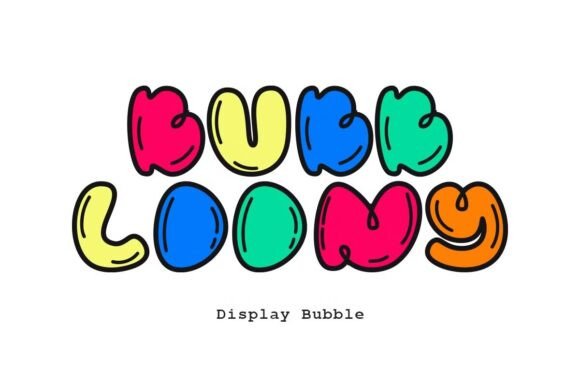
In the vast landscape of digital typography, finding a typeface that genuinely captures emotion without sacrificing readability is a rare feat. Designers often struggle to balance professionalism with personality, especially when working on projects that require a lighter, more whimsical touch. Enter Bubbloony, a fun and vibrant bubble font that has quickly become a favorite among creators looking to add a playful dimension to their work. Inspired by joy and imagination, this font features rounded, bubbly characters that bring an immediate pop of personality to any canvas.
Whether you are a seasoned graphic designer, a small business owner crafting your brand identity, or a parent creating custom invitations for a birthday party, understanding the nuances of a typeface like Bubbloony can significantly elevate your final output. This article explores the characteristics, applications, and practical considerations of using Bubbloony in your creative toolkit.
The Anatomy of Whimsy: Understanding Bubbloony’s Design
At its core, Bubbloony is designed to evoke feelings of happiness, lightness, and creativity. Unlike rigid serif fonts or stark minimalist sans-serifs, Bubbloony embraces softness. The characters are constructed with generous curves and uniform stroke widths, mimicking the physical properties of actual soap bubbles. This aesthetic choice is not merely decorative; it serves a psychological purpose. Rounded shapes are universally perceived as friendly and approachable, making them ideal for communicating warmth.
The font comes in two distinct styles: Regular and Outline. This duality provides designers with remarkable flexibility. The Regular style is bold and solid, perfect for headlines that need to stand out against busy backgrounds. In contrast, the Outline style offers a lighter visual weight, allowing for creative layering effects. For instance, you might use the Outline version as a subtle background element while overlaying the Regular version in a contrasting color to create depth and dimension.
Key Characteristics
- Rounded Terminals: Every letter ends in a smooth curve, eliminating sharp edges that might feel aggressive or formal.
- Consistent Weight: The uniform thickness ensures legibility even at smaller sizes, though it shines best in larger displays.
- Whimsical Proportions: The letters have a slightly exaggerated height-to-width ratio, contributing to their bouncy, energetic feel.
- Versatile Styling: The inclusion of both solid and outline variants allows for complex typographic hierarchies within a single family.
Practical Applications: Where Bubbloony Shines
One of the most common questions creators ask is, "Where does this font fit?" While Bubbloony is undeniably playful, its utility extends beyond simple decoration. Its colorful and whimsical design makes it ideal for specific industries and project types where engagement and friendliness are paramount.
- Children’s Education and Entertainment: From textbook covers to educational apps, Bubbloony helps create a welcoming environment for young learners. Its non-threatening appearance reduces anxiety and encourages interaction.
- Event Invitations: Birthday parties, baby showers, and casual gatherings benefit immensely from the font’s celebratory tone. It sets the expectation for a fun, relaxed event before the guest even opens the envelope.
- Social Media Graphics: In the fast-scrolling world of Instagram and TikTok, stopping the scroll requires visual impact. Bubbloony’s bold shapes catch the eye, making it perfect for quote cards, sale announcements, and story highlights.
- Creative Branding: Brands in the confectionery, toy, or pet care sectors can use Bubbloony to reinforce their brand personality. It signals to consumers that the company is approachable and fun-loving.
- Merchandise Design: T-shirts, tote bags, and stickers featuring Bubbloony text often perform well because the font itself acts as a graphic element. It transforms simple words into wearable art.
Evaluating Suitability: When to Use and When to Pause
While Bubbloony is a powerful tool, it is not a universal solution. Effective design requires matching the typeface to the message. Using a bubble font for a legal document or a high-end luxury fashion campaign would likely create cognitive dissonance for the viewer. Therefore, evaluating the context is crucial.
Consider using Bubbloony when:
- Your primary goal is to evoke joy, nostalgia, or excitement.
- Your target audience includes children, families, or creative communities.
- The design medium allows for expressive, non-traditional layouts.
- You need to soften a message that might otherwise feel too direct or corporate.
Exercise caution when:
- Legibility is the absolute highest priority, such as in long-form body text or safety instructions.
- The brand voice is serious, authoritative, or somber.
- You are designing for a highly formal corporate environment where traditional typography is expected.
Design Tips for Maximizing Impact
To get the most out of Bubbloony, consider these practical design strategies. First, embrace color. Since the font is inspired by bubbles, it naturally pairs well with bright, saturated palettes. Pastels can create a soft, dreamy effect, while neon colors can amplify the energy. Second, utilize white space. Because the characters are round and full, they need room to breathe. Crowding Bubbloony text can diminish its charm and make it difficult to read.
Another effective technique is pairing Bubbloony with a neutral sans-serif font for body copy. This creates a balanced hierarchy where Bubbloony handles the emotional heavy lifting in headlines, while the secondary font ensures clarity in detailed information. For example, a poster for a summer camp might feature Bubbloony for the title "Summer Fun" and a clean, simple font for the dates and registration details.
Technical Considerations for Digital Use
When using Bubbloony in digital formats, ensure that you have the appropriate licensing for web embedding if you are using it on a website. For social media graphics, exporting as a high-resolution PNG with a transparent background can allow you to place the text over images seamlessly. Remember that the Outline style may require careful color selection to ensure it remains visible against complex backgrounds.
The Value of Emotional Typography
In an era where digital communication can often feel cold and impersonal, fonts like Bubbloony serve as a reminder of the human element in design. They allow creators to inject personality and emotion into their work, fostering a deeper connection with the audience. By choosing a typeface that aligns with the emotional tone of your message, you enhance the overall user experience.
Moreover, the versatility of having both Regular and Outline styles means that Bubbloony can adapt to various design challenges. It is not just a one-trick pony; it is a flexible asset that can be manipulated, layered, and colored to suit diverse creative visions. Whether you are designing a logo for a new ice cream shop or creating a heartfelt greeting card, Bubbloony offers the tools to express joy visually.
Conclusion
Bubbloony stands out as a testament to the power of playful design. Its rounded, bubbly characters do more than just display text; they convey a mood. For general consumers, professionals, and business owners alike, incorporating such a distinctive font can differentiate your projects in a crowded marketplace. However, the key lies in intentional usage. By understanding its strengths and limitations, you can leverage Bubbloony to create designs that are not only visually appealing but also emotionally resonant.
As you explore your next creative project, consider whether a touch of whimsy might be the missing ingredient. With its dual-style offering and inherent charm, Bubbloony invites you to experiment, play, and ultimately, design with joy. For more inspiration on how to integrate playful typography into your workflow, explore design communities and case studies that highlight successful implementations of bubble fonts in modern branding.